Circa 1974
How the Brockley Society was founded
By Brockley Society
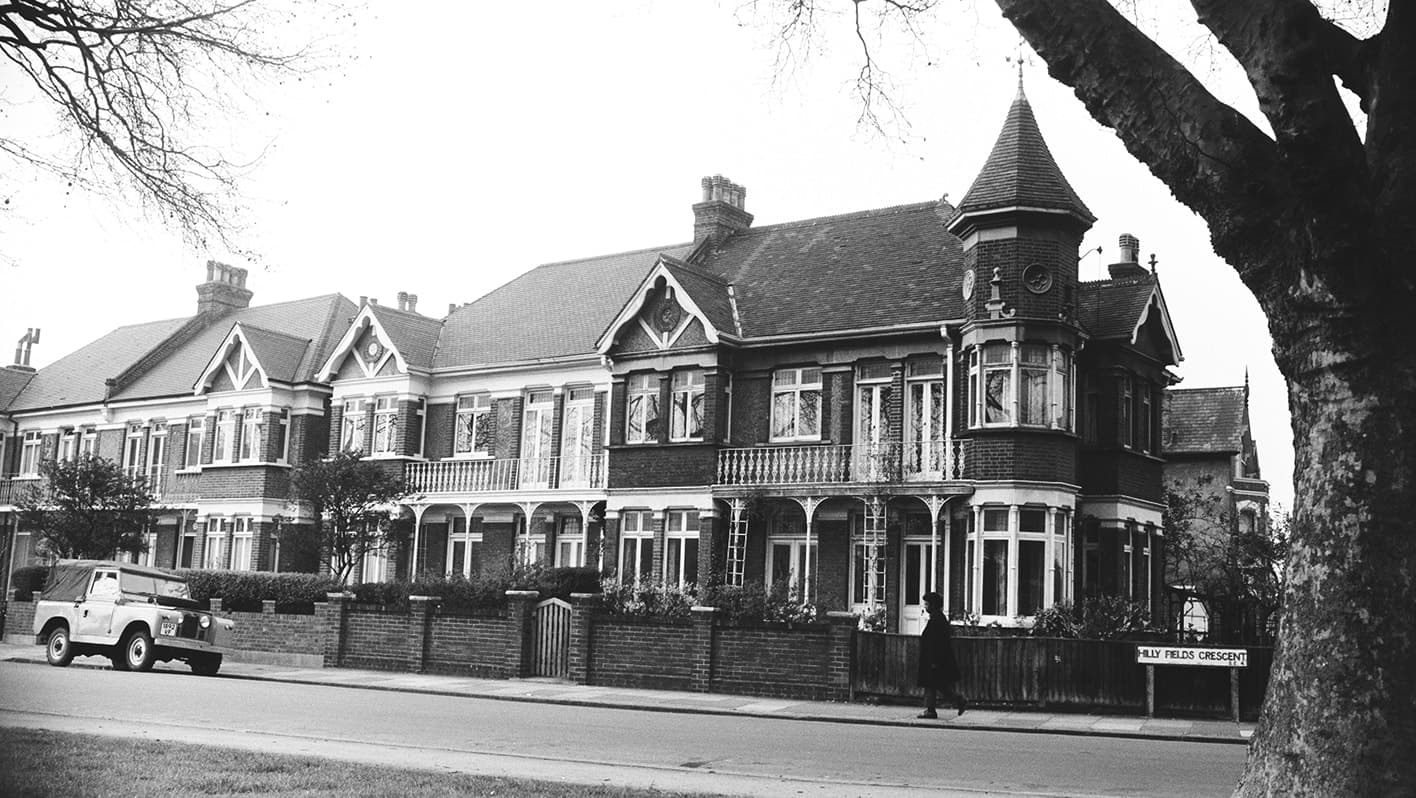
Victorian terraces in the Brockley Conservation Area
In the early 1970s, one Brockley resident chained herself to the trees in front of Rokeby House to stop them being cut down.[1] She was a founding member of a group that spent years learning planning law, sitting through council meetings and arguing with developers. Their work led, in 1974, to the designation of the Brockley Conservation Area and the founding of the Brockley Society.[1][2]
The threat
By the late 1960s, most of Brockley's wartime bomb damage had been repaired. Large modern blocks had gone up on Wickham Road and Harefield Road, with smaller ones on Tyrwhitt Road and Adelaide Avenue where single houses had been lost.[1] Almost everywhere a 1950s or 1960s building stood, a bomb had once fallen.[1]
When the financial climate improved, developers looked at the surviving Victorian houses and saw buildings past their prime. Their plan was to demolish them and put up new blocks of flats in the modern style, which promised large profits.[1] The grand villas and ornate terraces could have gone the way of the bomb sites.
The fight
A steering committee formed in about 1970. It elected road representatives, and its members read up on planning law, the civic amenities acts and government directives.[1] They attended every meeting of the council planning committees, wrote a constitution, and watched every change to window frames, roofs and trees.[1]
For its emblem the group adopted the Wyvern, the crest of the local landowners of the eighteenth and nineteenth centuries.[1]
The campaign made slow legal progress. In 1972, a government directive allowed conservation areas to be created where they met the terms of the 1967 Civic Amenities Act.[1] The pressure group stopped all further demolition in 1973 — too late for three large houses in Tressillian Crescent, pulled down by a developer who had already done heavy damage in Brockley Park.[1]
1974
In 1974, much of north Brockley was designated a conservation area, and the Brockley Society was founded in the same year.[1][2] The Society is open free to everyone living in the conservation area, and is run entirely by volunteers.[1]
Gillian Heywood, one of its most persistent campaigners, received an MBE in 2007 for "Services to the community of Brockley".[1] The Society still delivers a free newsletter three times a year to 4,000 households and runs the Hilly Fields Midsummer Fayre, its biggest annual event.[1]
What was saved
The result is visible on every street. Brockley holds south London's largest area of Victorian housing, along with Edwardian and early twentieth-century Arts and Crafts buildings around St Margaret's Road.[1] By the Society's account, there are more stretches of Victorian kerbstone here than anywhere else in London.[1]
The houses that the bombs missed are still standing because a group of residents learned the rules and refused to give way.
Sources
- 1.^
Brockley Society, How It Began / About Us (drawing on a talk by Gillian Heywood MBE, July 2011) — brockleysociety.org.uk
- 2.^
Brockley Society, History — brockleysociety.org.uk